
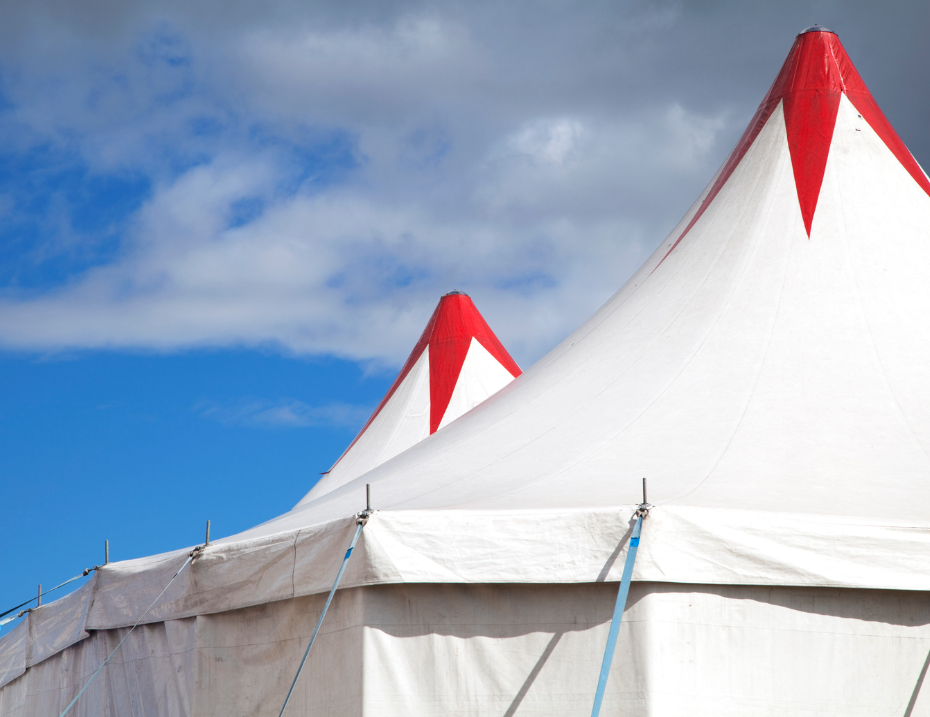
The best tent sidewalls depend on weather exposure, event timing, guest comfort, privacy needs, and ventilation. Solid sidewalls offer the strongest protection from wind and rain, while clear and windowed panels preserve natural light and views. For humid, cool, or crowded events, use a partial enclosure and maintain airflow to reduce condensation.
The most flexible event setup usually combines more than one sidewall style. For example, solid panels can block prevailing wind, window panels can brighten dining areas, and zippered entries can maintain easy access without leaving the entire tent exposed.
1. Full Solid Tent Sidewalls
Full solid tent sidewalls run from the tent valance to the ground with no windows. They are the most practical choice when wind protection, rain coverage, privacy, and shade are the priority.
Use solid sidewalls for:
- Windy outdoor events
- Evening receptions
- Storage or catering zones
- Private areas, such as change rooms
- Events with equipment that needs protection from rain
Solid panels can make a tent feel darker and more enclosed, especially during daytime events. Balance them with windowed or clear panels on protected sides whenever natural light and outdoor views matter.
2. Cathedral Window Sidewalls
Cathedral window sidewalls combine a solid lower and upper frame with decorative clear windows. They provide weather protection while bringing daylight into the tent and maintaining a more formal event appearance.
Cathedral window panels are popular for weddings, showers, corporate dinners, and daytime celebrations. They work well around dining areas because guests can see outside without being directly exposed to wind or rain.
These panels are often used with solid walls rather than as the only sidewall type. That combination gives the event a polished look while keeping the tent practical when weather changes.
3. Full Clear Tent Sidewalls
Clear tent sidewalls create an open, glasshouse-style effect. They are a strong choice for scenic venues, waterfront settings, gardens, city views, and events where guests should feel connected to the outdoors.
They can block wind and rain without hiding the surroundings. However, clear vinyl can show condensation or fogging when warm, humid air inside the tent meets cold outdoor conditions. Proper airflow is important, particularly during evening events, fall weddings, or enclosed winter tent setups.
Use clear panels strategically instead of automatically enclosing every side. Keeping selected sections open or using entrances that can be adjusted helps preserve visibility while improving air movement.
4. Standard Windowed Sidewalls
Standard windowed sidewalls offer a balance between solid protection and clear visibility. The windows admit daylight and reduce the closed-in feeling of a fully solid enclosure, while the vinyl surround helps block wind and rain.
They are a practical option for:
- Backyard parties
- Corporate events
- Community gatherings
- Daytime celebrations
- Food-service tents
Windowed panels are a versatile middle ground when you want guests to feel sheltered but do not need the completely open appearance of full-clear walls.
5. Mesh Tent Sidewalls
Mesh tent sidewalls are designed primarily for airflow and insect control. They are useful for warm-weather events where guests need protection from mosquitoes, flies, or other pests but still want a breeze.
Mesh walls are not the answer for heavy rain or strong wind. They should be considered a comfort feature, not a weather barrier. For summer events, however, combining mesh on one or two sides with solid panels on the windward side can help maintain ventilation while reducing exposure to insects and gusts.
Mesh works best when airflow is more important than full weather enclosure.
6. Zippered Entrance Sidewalls
Zippered entrance panels give planners more control over how people enter and leave the tent. They can create a dedicated entrance, close off a service area, or allow quick adjustments if wind or rain shifts during the event.
These panels are especially useful when the tent is mostly enclosed. Without a clear entrance plan, guests may push through loosely secured sidewalls or create traffic congestion around the tent perimeter.
A zippered panel can also help preserve heat when temporary heaters are used, while still allowing staff and guests to move in and out efficiently.
7. Half Sidewalls
Half sidewalls cover only the lower portion of the tent perimeter. They are useful when you want to define the space, create a decorative boundary, or add branding without blocking views and airflow.
Use half walls for:
- Outdoor bars and cocktail spaces
- Trade-show booths
- Casual receptions
- Vendor tents
- Events with scenic surroundings
They provide minimal protection from driving rain or strong wind, so they should not be the only sidewall choice for weather-sensitive events. However, half walls can make an open tent feel more finished without making it feel closed off.
8. Mixed Sidewall Layouts
A mixed sidewall layout is often the best answer for unpredictable weather. It allows you to match every side of the tent to its actual exposure and purpose. The windward side can use solid panels, the view side can use clear walls, the dining area can use windows, and the entrance can use zippered access.
For condensation control, avoid sealing every side too early. Keep practical openings where weather allows, especially when the tent is full of guests, food service, heating equipment, or dancing. Ventilation reduces trapped humidity and helps maintain clearer sidewalls, more comfortable air, and better visibility.
Varsity Tents can help you build the right tent sidewall plan for your event, whether you need protection from wind and rain, a clear-view wedding enclosure, or flexible panels for changing conditions. Their team can coordinate tent size, sidewall combinations, tables, seating, and other rental essentials based on your guest count, location, and event layout.
Contact Varsity Tents early to reserve the equipment and configuration that will keep guests comfortable, dry, and ready to enjoy the occasion.